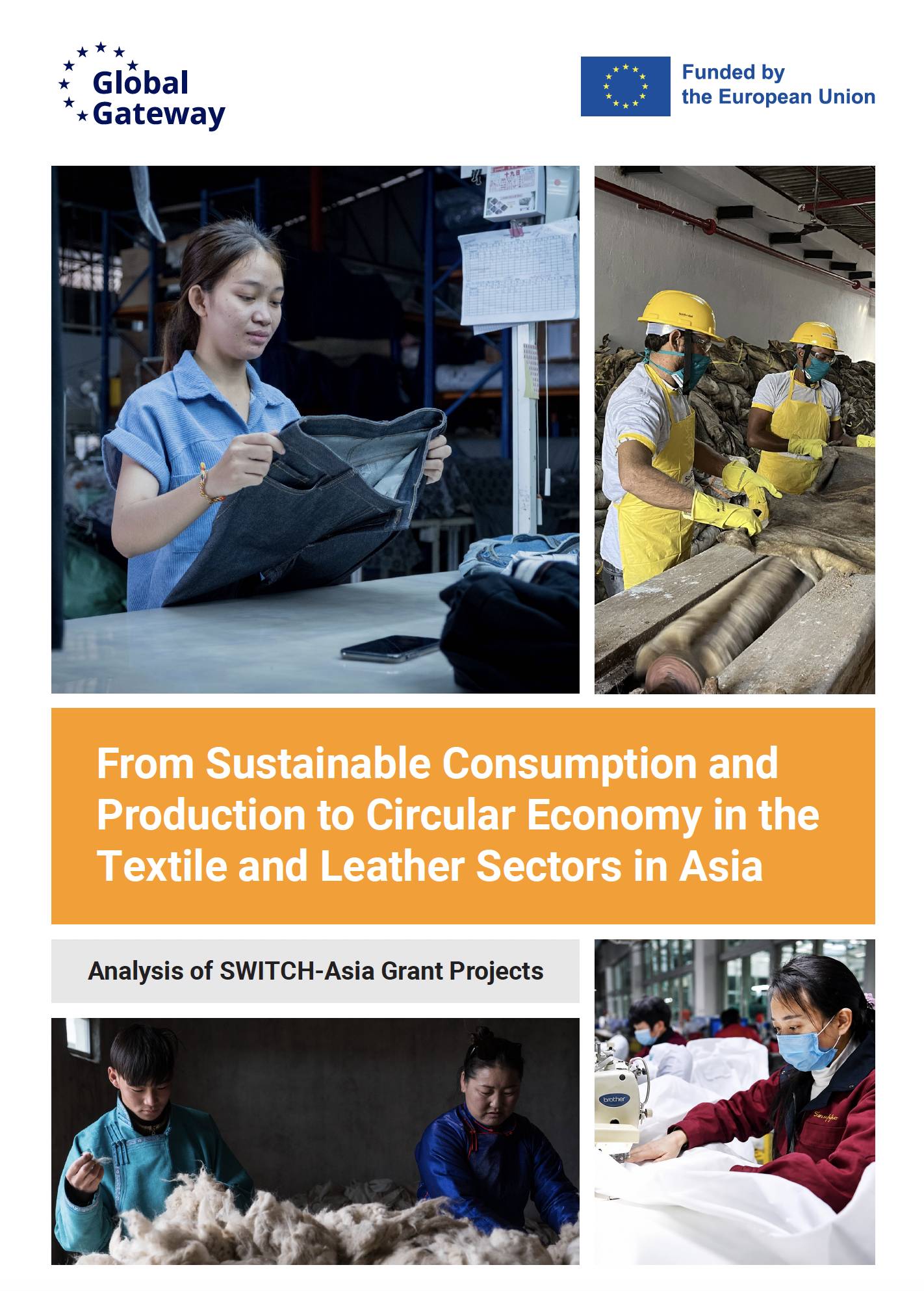
This report analyses eleven SWITCH-Asia grant projects, with a combined value of approximately EUR 24.7 million, implemented in Cambodia, China, India, Mongolia, Uzbekistan and Tajikistan to advance circular economy (CE) and sustainable consumption and production (SCP) practices in the textile and leather sector. The analysis demonstrates that circular economy principles are widely reflected across the portfolio, particularly through resource-efficiency improvements, cleaner production practices, waste reduction and valorisation, recycling, renewable energy adoption, and environmental performance enhancement. At the same time, the findings reveal significant differences in the depth and scope of circular economy application across projects. Most interventions remain concentrated on production-stage improvements and end-of-life management, while comparatively fewer projects address upstream design considerations, product life extension, reuse, repair, and other higher-value circular strategies.