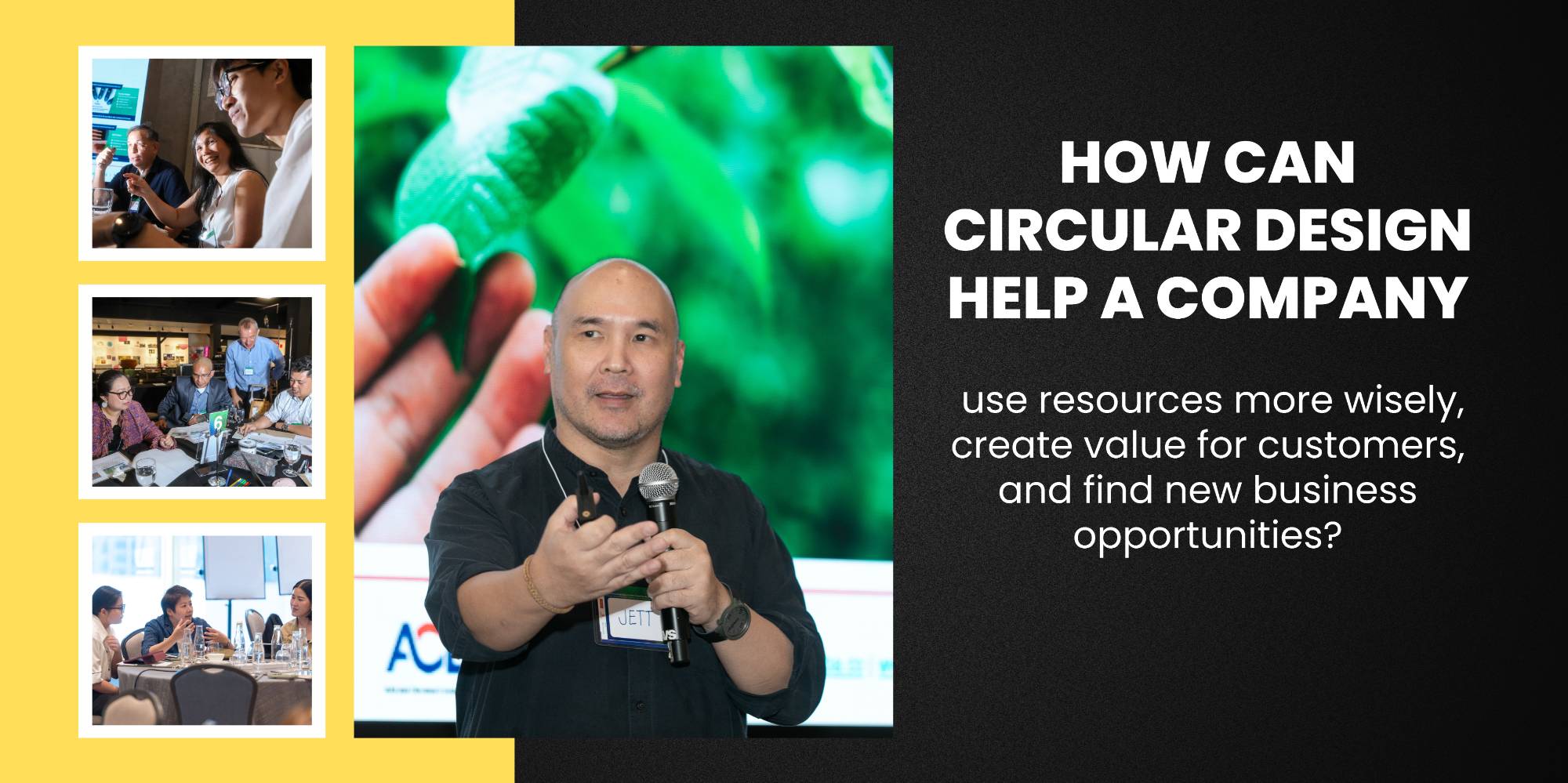
How can circular design help a company use resources more wisely, create value for customers, and find new business opportunities? These questions guided two-day design workshops, “Circular by Design: closing cycles to open new business opportunities”, held in Manila on 20-21 October 2026 and Bangkok on 27–28 October 2026.
Across Southeast Asia, circular economy ambitions are set out in regional and national policy agendas and frameworks. The 2021 ASEAN Circular Economy Framework provides a shared direction for Circular Economy as enabler of regional economic cooperation. The Philippines’ National Action Plan on Sustainable Consumption and Production and Thailand’s Bio-Circular-Green (BCG) Economy framework provide national direction for the transition to a low carbon, resource efficient and circular economy.
Turning these ambitions into practice depends on businesses developing products, services and processes that use materials and other resources more efficiently and longer, and recover them for repeat use. Critical to this is advancing circularity through the design of products, activities and systems. With an estimated 80% of environmental impacts determined in the design stage, the design of a product and/or of a business process becomes paramount in enabling product and/or material circularity[1]. Transitioning to a circular economy requires infusing circularity thinking in good – industrial – design practices ensuring that the company’s core strengths are utilized to advance circularity ambitions.
In response, the ASEAN Circular Economy Business Alliance (ACEBA), with support from the EU SWITCH-Asia Policy Support Component, organised two design workshops on 20-21 October 2026 in Manila, Philippines, and 27-28 October 2026 in Bangkok. The workshop in the Philippines brought together 12 companies from seven sectors (furniture and homeware, ceramic tile, footwear, healthcare, paper products, hospitality, and agri-food). The Thailand workshop brought together 11 companies from seven sectors (agri-food, textile, leather goods, furniture and homeware, plastics, building materials, and waste management). The workshops introduced circular economy as a responsible innovation and business practice and provided a practical approach for business to mainstream circular economy in structured, and user-oriented design. Company teams furthermore actively explored how circularity can be applied to their own products, services, and business activities. The workshops were held in collaboration with the Design Center of the Philippines, and Thailand’s Creative Economy Agency.
Circular design
The workshop opened with an introduction to circular economy concepts and the business case for moving beyond the familiar, linear “take, make, use and throw away” model. Use-case examples from Southeast Asia and beyond showed that circularity can take many forms, from designing products for longer use, repair or reuse to finding productive uses for by-products and rethinking how a product or service is delivered. The examples helped participants see circular economy as an integrated approach for improving the sustainability of use of materials, energy and water, rather than a question of waste management and recycling. Beyond reducing waste, circular strategies reduce reliance on virgin resources and volatilities in their costs and availability, while supporting resource efficiency and creating new valuable products and services.
A business can achieve circular innovation at different levels: circular products or services that offering value to consumers; circularizing business processes to deliver these products/ services; adjusting business models; and creating circular value chains and s supportive ecosystem. — Dr. Rene Van Berkel
From company strengths to circularity challenges and design solutions
Through guided exercises, participants worked on company-specific circular challenges/ problems, by examining business strengths, opportunities, and circularity ambitions, and ideating a menu of circularity concepts following established industrial design methodology (Initiate–Ideate–Implement). Tools such as the Circular Solution Canvas helped teams connect the circular ambitions with products, services or processes they could modify or improve, and the value these may create for the business, and for the people and the environment it interacts with. Teams also crafted initial plans to carry these circular ideas forward.
Design is not only to differentiate (makes a business or a product or service stand out) but more so, to make a difference. Circular design innovation is connecting user experience with design and the circular economy—What do people need, value, and experience; how can we create a better solution; and how can we retain value and eliminate waste? — Jett Pisate Virangkabutra
Seeing new possibilities: Learnings from the Workshops
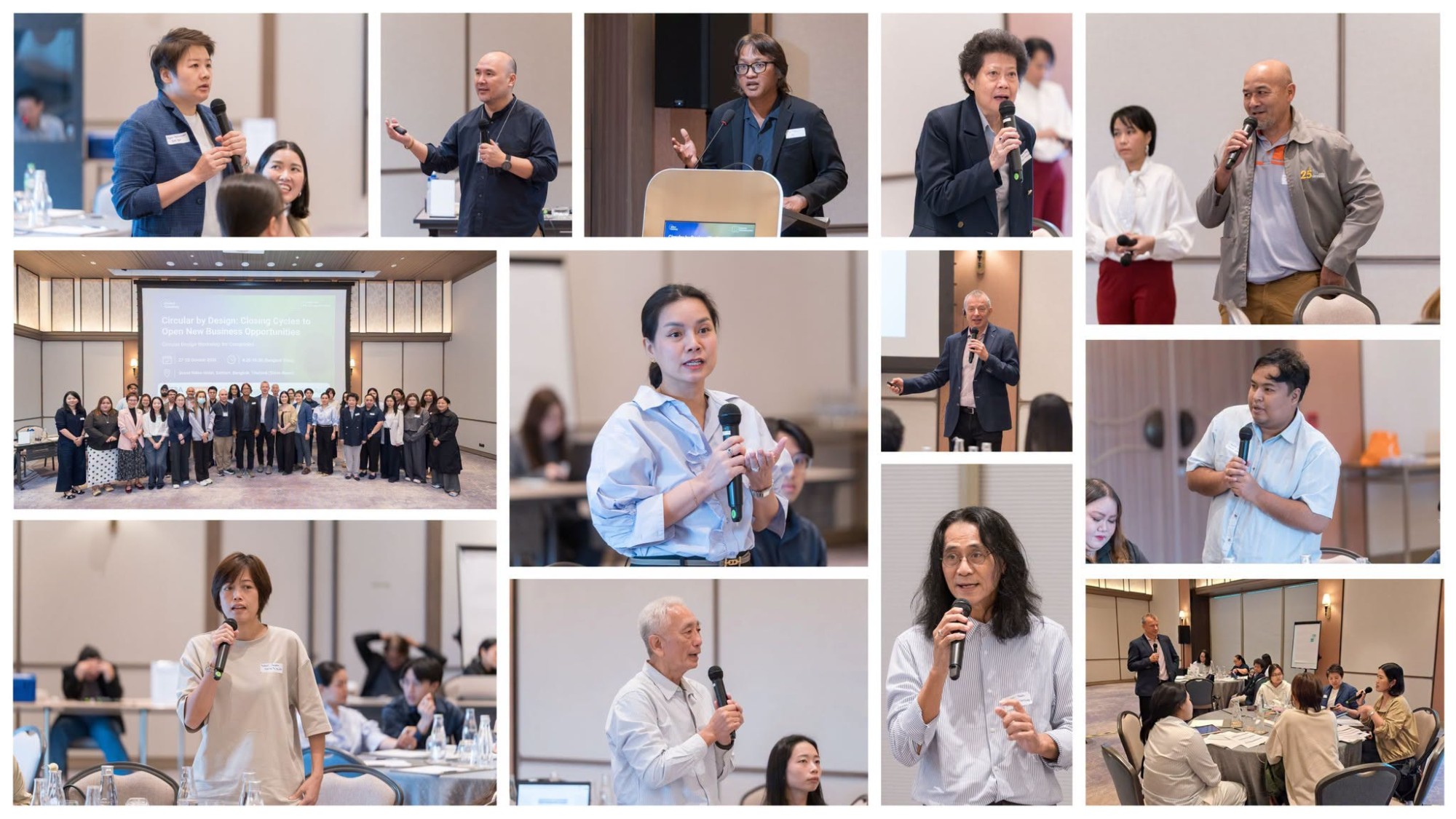
Participants from the workshop highlighted the value of looking beyond the established, and considering a product’s full lifecycle, from design, manufacturing, through use to end-of-life.
“We learned to think beyond the obvious, ‘outside the box’, and look at the whole product system and business processes, instead of just one particular stage, from design to end of life. Looking at our products and business processes through a circularity lens created new insights for us”, said one Thai participant.
A participant from the Philippines found “there are a lot aspects of circular economy to explore and discover, based on the experience and example of different companies locally and internationally. Aside from using design for aesthetics and functionality, this workshop made us think of circular economy as an integral part of product design and development.”
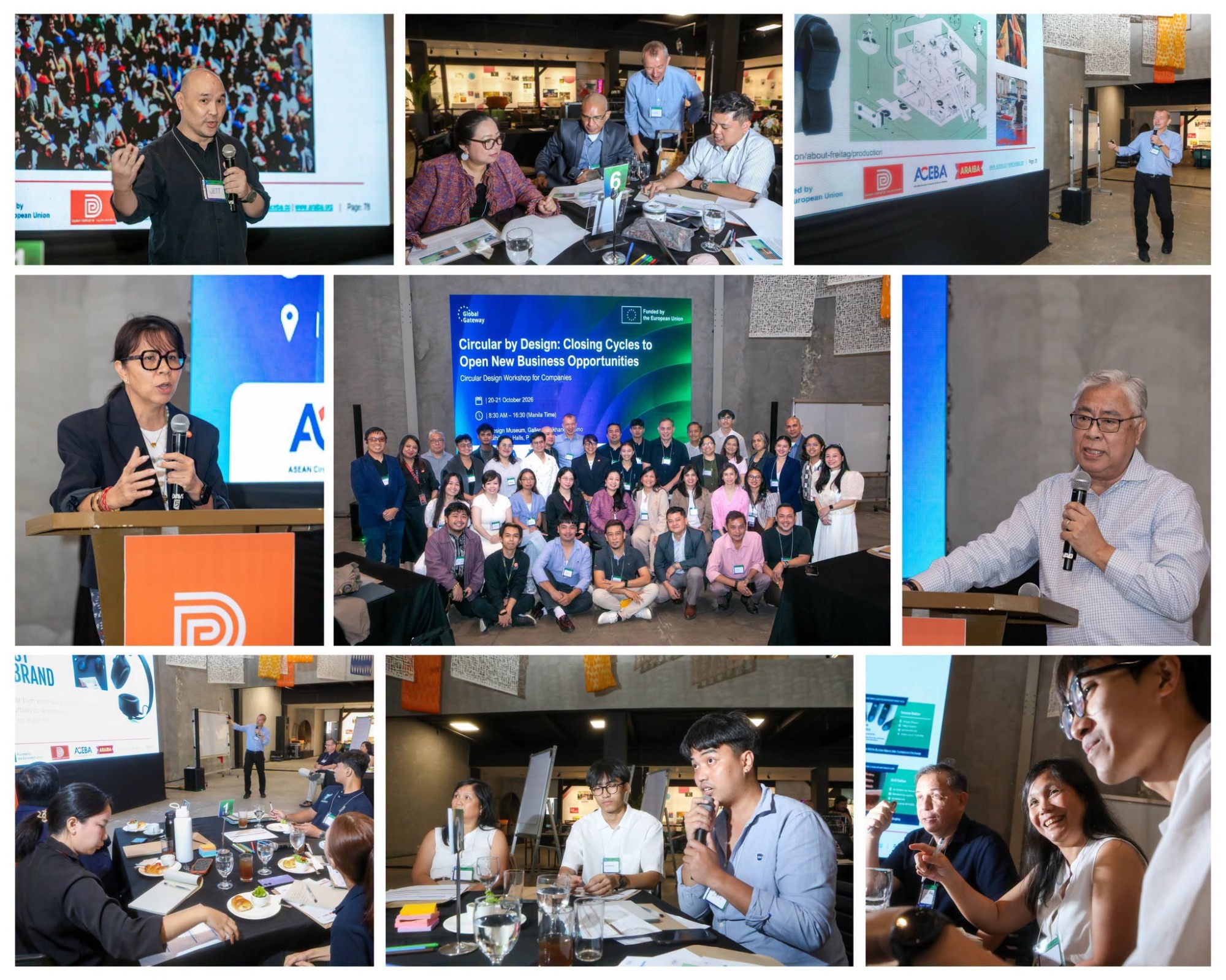
Participants also described the process as a useful challenge, and also highlighted the importance of communicating value clearly within the business and to customers and value chain partners. A circular product/ service offering needs to make its benefits understandable and relevant to the people it is designed for:
“The workshop emphasized how we should apply the principles of human-centered design in our products and services, and to take into account actual needs and experiences of our users/ clients,” was a reflection from another Philippine participant.
“Some ideas felt familiar, while others offered something new to learn,” said a Thai participant. “Asking ‘Why?’ repeatedly encouraged deeper exploration, and examples from other products broadened perspectives on what might be possible with our products and business”.
The circular business model canvas and idea card helped participants organize product and business ideas systematically:
“I must admit that I’ve done several trials and errors for my products before coming to a circular solution. But this deisgn workshop course organized the steps in a systematic way and walked us through the (design thinking) process which helped us get to the ideas more efficiently,” said one Thai participant.
“The business model canvas, alongside with the idea card, helped us deep dive into our current business structure, strategies, and offerings using a circular economy lens, and guided us in conceptualising new product and service ideas,” said a Philippine participant.
Participants went home with new insights, and questions to explore as they further develop the circular ideas generated, engage customers and colleagues, and identify the partnerships or capabilities required to put the ideas into practice. By connecting regional circular economy ambitions with country-level learning and company-specific design challenges, the Manila and Bangkok workshops showed a practical way for businesses to begin designing for circularity, and translating circularity concepts into practical product, service and business solutions.
[1] Tan, Esmonde SH, et.al. Design for Circularity: A Framework for Sustainable Product Redesign. Procedia CIRP, Volume 122, 2024, pp. 479-484. ISSN 2212-8271. https://www.sciencedirect.com/science/article/pii/S2212827124000921