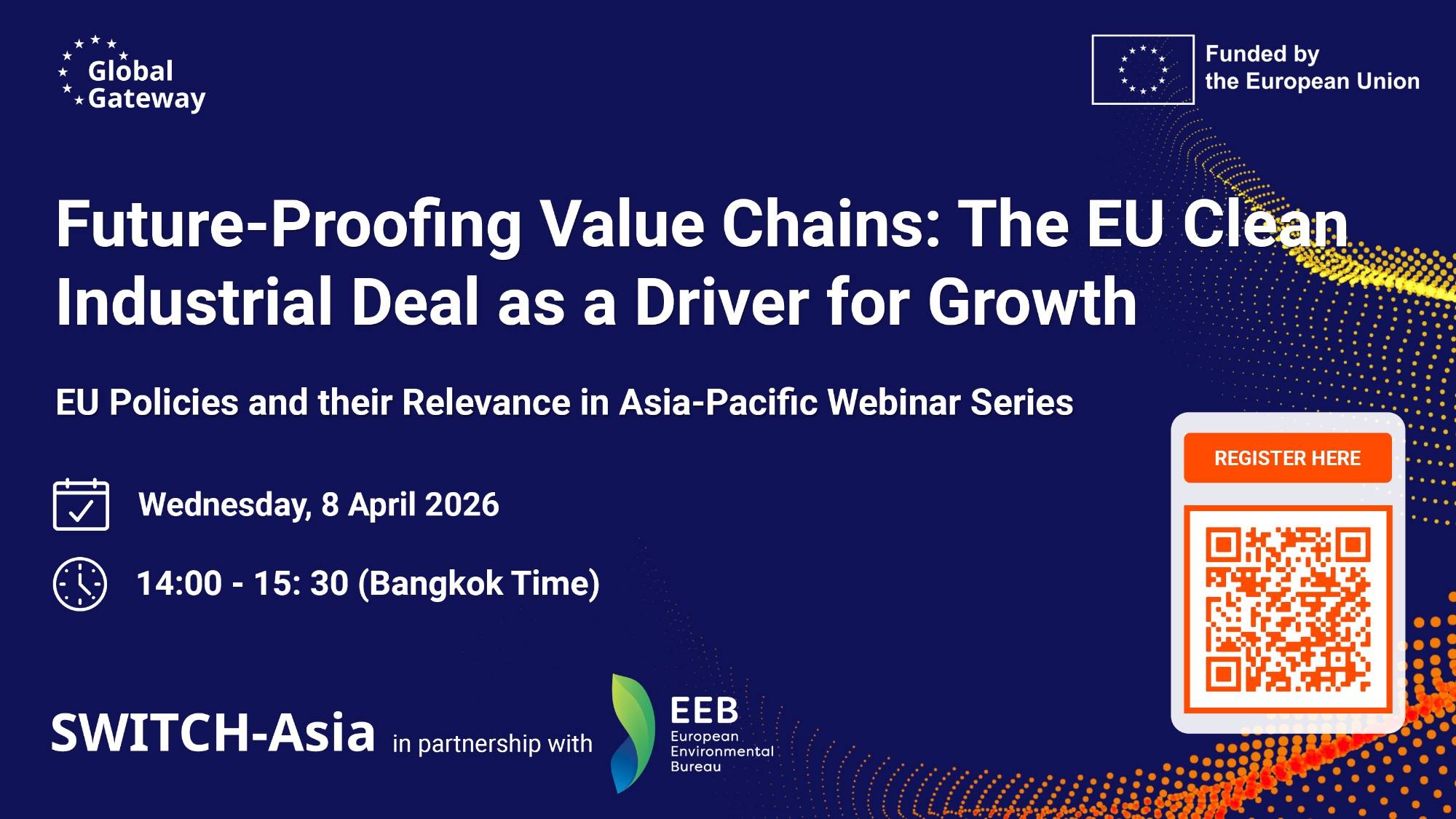
WHEN: 8 April 2026 I TIME: 14:00 - 15:30 (Bangkok Time) I Register HERE
Background:
The EU Clean Industrial Deal (2025) is the European Union’s new overarching growth strategy designed to harmonize decarbonization with economic competitiveness. While the original Green Deal (2019) focused on environmental regulations and targets, the Clean Industrial Deal acts as a "Business Plan for Net-Zero." It is built on the reality that for industries to go green, they must remain profitable and resilient against global competition.
The policy is anchored by two major legislative pillars that directly affect global supply chains:
- The Industrial Accelerator Act (planned for February 2026): This is one of the most important parts of the Deal. It aims to create "Lead Markets" for clean products. The idea behind it is to introduce non-price criteria in public procurement and private bidding, meaning, for instance, that the carbon footprint and "circularity" of a product (like steel, cement, or textiles) carries more weight in winning contracts, regardless of whether the product is the cheapest option. Also, the Act will propose a label to define “green steel” according to GHG emission performance.
- The Circular Economy Act (expected Q3 2026): This act centres on the principle of facilitating a secondary market for raw materials. In combination with the upcoming Product Act, and the implementation of the Ecodesign for Sustainable Products Regulation, it mandates a Digital Product Passport, which is likely to require Asian manufacturers to provide granular data on the origin and recyclability of every component in their products, with increased emphasis on transparency and verifiability of recycled content.
For Asian value chains, the Deal introduces a new era of "Green Conditionality" with the scaling of the Carbon Border Adjustment Mechanism (CBAM) and new Sustainability Labels.
Webinar Session:
The EU SWITCH-Asia Policy Support Component and the European Environmental Bureau, are convening the webinar, Future-Proofing Value Chains: The EU Clean Industrial Deal as a Driver for Growth to:
- Provide a breakdown of the Clean Industrial Deal’s core pillars, specifically the Industrial Accelerator Act and the Circular Economy Act (2026).
- Understand how the Clean Industrial Deal may re-shape key value chains and relations between European and Asian businesses.
- Discuss practical tools for future-proofing, including the adoption of Life-Cycle Costing (LCC) and the use of Digital Product Passports for better value chain traceability.
Moderator:
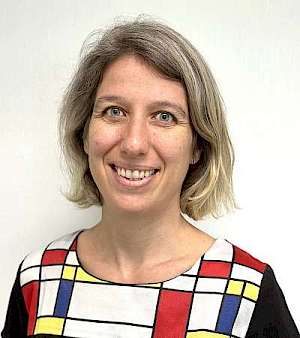 Ms Elodie MARIA-SUBE, Key Expert on EU policy development and partnership building, SWITCH-Asia Policy Support Component
Elodie is specialized in European Affairs related to topics of circular economy, SCP, climate change and environmental management, and has extensive experience in stakeholder consultation and engagement at the EU level, as well as with high-level officials in Ministries of Environment and Finance in Asia. For over a decade, Elodie has worked in South and South-East Asia on environment and climate change. She is currently leading the SWITCH-Asia Technical Advisory project on Sustainable/ Green Public Procurement for Transformation.
Speakers:
 Eva BILLE, Head of Circular Economy, European Environment Bureau
Eva is in charge of the EEB activities around circular economy policy. She studied economics and graduated with a Master’s Degree specialising in resources, development and growth from Tilburg University. She has previously spent 10+ years as an EU policy consultant, working with major companies and trade associations in the Brussels bubble. She has also worked for the UN in Lebanon and spent 4 years working in China.
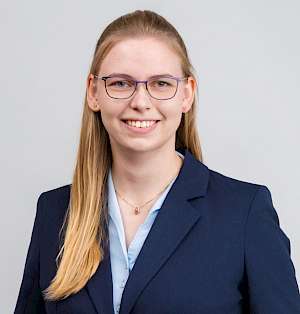 Ulrike SENGSTSCHMID, Sustainability Advocacy Manager, EU-ASEAN Business Council
Ulrike Sengstschmid is an Advocacy Manager at the EU-ASEAN Business Council, where she leads the Council’s work on sustainability, energy, and transport. Her focus is on advancing ASEAN’s green transition, with particular emphasis on circular economy, decarbonisation, and carbon market development. She regularly engages with policymakers, industry leaders, and regional platforms to support evidence-based policy and stronger public–private collaboration. Prior to joining the Council, Ulrike worked at the Asia Competitiveness Institute, National University of Singapore (NUS).
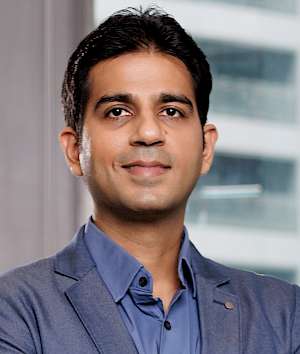 Siddarth LULLA, Partner, Intellecap
Siddharth Lulla is a climate and circular economy leader at Intellecap, where he drives decarbonization and circular transformation initiatives across emerging markets. He operates at the intersection of enterprise development, blended finance, and systems change, with strong expertise in textile value chains, MSME transition pathways, and climate-aligned investment strategies. Siddharth is currently driving large-scale programs and catalytic funds to advance circular economy and climate action in the Global South, with a focus on aligning capital and innovation to deliver inclusive, long-term environmental and livelihood impact.
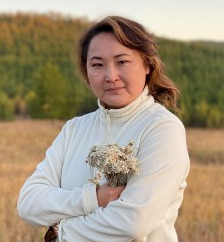 Ukhnaa SARANGOO, Project Manager, Agronomes et Vétérinaires Sans Frontières and EU SWITCH-Asia STeP EcoLab II Project
A Textile Engineer with a Doctor's degree in Engineering Science from the Universite de Haute Alsace with 15 years of experience in wool and cashmere sector including executive positions in major cashmere producers i.e Goyo LLC. Currently, Sarangoo Ukhnaa is a Project manager at the “Agronomes et Vétérinaires Sans Frontières” INGO, representative office to Mongolia to build the sustainable cashmere value chain and support sustainable cashmere export and sales from Mongolia. Connecting the passions of her youth in academia and engineering knowledge into the business practice qualifies her as a valuable asset in the cashmere industry. Her responsibilities are to manage the EU SWITCH-Asia STeP EcoLab II Project (Sustainable Textile Production and Eco-Labeling in Mongolia) aiming to support Mongolian textile industries to adopt environmentally friendly sustainable practices in its production cycle and as a whole value chain.
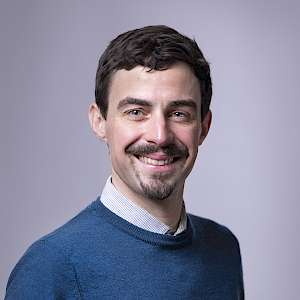 Jean-Luc WIETOR, Head of Buildings and Industry, ECOS
Jean-Luc Wietor is the Head of the Buildings and Industry team at ECOS. He oversees and coordinates the activities of the team, provides thematic and strategic insight on reducing environmental impacts of materials for the construction sector, and on related fundraising activities. Jean-Luc has worked in the chemical industry, in public affairs and in NGOs, dealing with industrial emissions, chemicals policy, sustainable finance and industrial strategies. Jean-Luc holds a PhD in chemistry from the University of Cambridge and an MBA from FOM Düsseldorf.
Agenda:
|
8 April 2026 |
|
|
14:00 |
Introduction to the Webinar
|
|
14:05 |
Presentation: EU’s Clean Industrial Deal
|
|
14:20 |
Panel Discussion Moderated by Elodie MARIA-SUBE, Key Expert on EU policy development and partnership building, SWITCH-Asia Policy Support Component
|
|
15:00 |
Q&A |
|
15:25 |
Concluding Remarks and Next Steps
|